
National Breast Cancer Awareness Month: Recovering at Home Takes More Than Medicine
According to the National Cancer Institute (NCI) and the American Cancer Society (ACS), about 1 in 8 women in the United States (roughly 12–13%) will be diagnosed with breast cancer at some point in their lifetime. Behind that number are treatment schedules, fatigue that doesn't follow a convenient timeline, and a life that still needs to function while someone is healing. Awareness campaigns tend to focus on screening and early detection, both genuinely important, but far less is said about what daily life actually looks like once treatment begins.
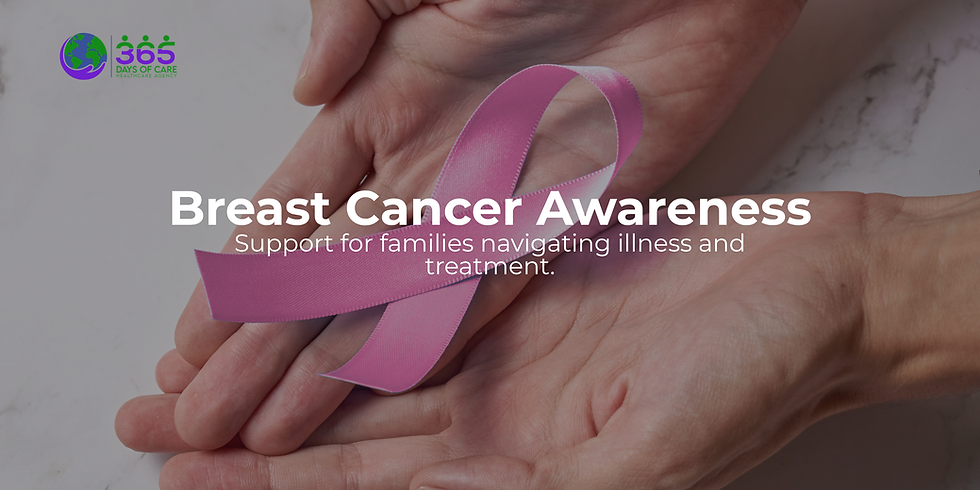
It's easy to picture recovery as a medical process: appointments, medications, follow-ups. What's harder to see from the outside is everything happening around that process: the meals that still need cooking, the laundry, the errands, the simple act of getting through an ordinary day while your body is asking for rest it isn't getting. Chemotherapy in particular can bring fatigue that doesn't respond to a good night's sleep, nausea that changes what someone can eat, and immune changes that make everyday tasks feel riskier than usual.
Recovery support isn't just about physical tasks, though those matter too: help with meals, transportation to appointments, medication reminders and light housekeeping. It's also about not having to manage all of that alone while healing is already asking so much. A caregiver who understands what treatment involves can also help family members know what to expect, which is its own kind of relief.
Families often underestimate how much logistical weight falls on a caregiver during someone's treatment or recovery, until they're living it. Rides to chemotherapy, sometimes several a week, often at inconvenient hours. Meals when cooking feels impossible, or when taste and appetite have changed entirely, sometimes requiring real trial and error to find what someone can tolerate. A quiet presence on the harder days, someone who understands that some days call for help, and some days simply call for company, without needing to be told which.
Illness and Recovery Support at 365 Days of Care is built to absorb some of that load, so healing doesn't have to compete with keeping a household running. Our caregivers adjust to what each day actually requires, sometimes hands-on help, sometimes simply being there, and we coordinate closely with family members so care stays consistent even as needs shift week to week during treatment.
This October, if you know someone navigating a breast cancer diagnosis, or recovering from any serious illness, know that support exists that goes beyond what medicine alone can offer. Recovery is rarely a straight line, and having consistent help along the way can make the difference between healing well and healing exhausted.
We are a DDD-approved provider serving Mercer, Middlesex, Monmouth, Ocean, and Essex counties. Book a FREE consultation today: we'd be glad to talk through what recovery support could look like for your family.
833-344-3446


Comments